The Algorithm Knows Where You Are Going—And That Is Exactly the Problem
Photographed to Death
There is a lavender field in Provence that has been photographed approximately four million times. There is a particular slot canyon in Arizona whose images have circulated so widely that visitors arrive with a precise mental picture of the shot they intend to capture—and often leave without noticing much else. There is a café in a small European capital that became so relentlessly tagged on social media that the owners eventually installed a sign requesting that guests put their phones away, an appeal that was itself, of course, photographed and shared widely.
This is the central paradox of algorithm-driven travel: the act of documenting a place for social media consumption contributes directly to the conditions that make that place less worth visiting.
Over the past decade, social media platforms have become the dominant source of travel inspiration for American travelers. According to multiple industry surveys, a significant majority of travelers under fifty report that social media imagery influenced their most recent destination choice. The appeal is understandable. A well-composed photograph of a turquoise lagoon or a fog-draped mountain pass communicates something immediate and visceral that a travel brochure cannot easily replicate.
But the nature of social media algorithms is to amplify what is already popular, which means that the destinations receiving the most attention are the ones that were already receiving the most attention. The result is a feedback loop that concentrates visitor traffic with remarkable efficiency.
What Overtourism Actually Feels Like
The term "overtourism" has become something of a cliché in travel journalism, which is unfortunate because the reality it describes is genuinely worth understanding. Overtourism is not simply the presence of many visitors in one place. It is the systematic degradation of an experience that was once meaningful because too many people are attempting to have it simultaneously.
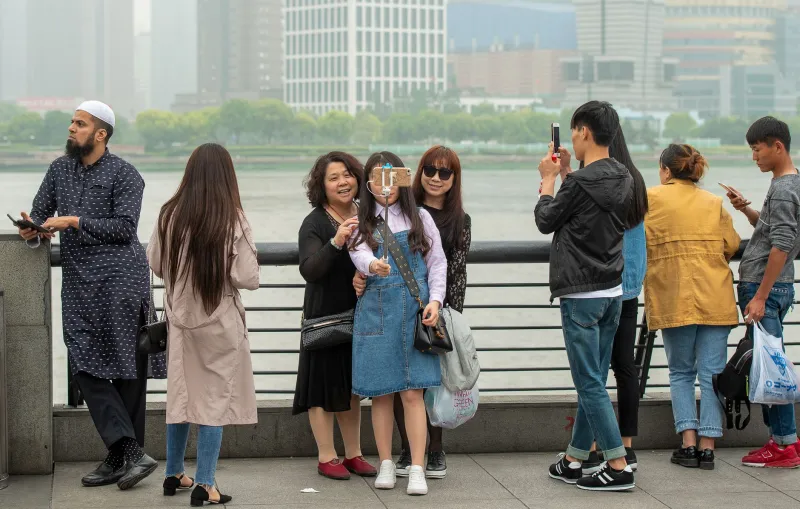
Consider what it means to visit a UNESCO World Heritage site on a weekend in peak season after a travel influencer with several million followers has recently featured it in a video. The parking situation is untenable. The walking paths are congested to the point of discomfort. The local vendors, who once offered a genuine window into regional culture, have largely been replaced by operations catering to the specific preferences of the dominant tourist demographic. The quiet that made the place worth visiting has been replaced by the ambient noise of several thousand people taking photographs.
The experience on offer is not, in any meaningful sense, the experience that inspired the original photograph. It is a degraded copy of a copy.
Beyond the visitor's personal disappointment, there are real consequences for local communities. Residents of popular destinations increasingly report feeling displaced by tourism infrastructure that serves visitors at the expense of livability. In some cases, local governments have begun implementing visitor caps, reservation systems, and access fees—measures that would have been unthinkable a generation ago.
The Authenticity Deficit
There is a subtler problem with algorithm-driven destination selection, one that operates below the level of logistics and crowds. When travelers choose destinations based on their visual currency on social media, they are implicitly prioritizing the appearance of an experience over the substance of one.
This is a meaningful distinction. A destination that photographs beautifully may offer relatively little in the way of genuine cultural depth, historical complexity, or the kind of human interaction that travelers consistently identify as the most memorable aspect of any trip. Meanwhile, destinations that offer precisely those qualities may not translate well into the compressed visual grammar of a social media post—and therefore receive minimal algorithmic attention.
The net effect is that a generation of American travelers is being systematically steered away from the experiences most likely to be genuinely rewarding, and toward the ones most likely to generate engagement on a platform.
The Curated Alternative
The counterweight to algorithm-driven travel is not simply willpower, though that helps. It is the presence of a framework sophisticated enough to resist the pull of viral destinations and replace it with something more considered.
This is one of the less-celebrated advantages of thoughtfully designed tour itineraries. A well-constructed travel program is assembled by professionals whose primary obligation is to deliver a meaningful experience—not to generate clicks. The destinations and experiences included in a quality itinerary have been evaluated against criteria that social media algorithms are structurally incapable of measuring: the depth of a cultural encounter, the quality of local access, the ratio of insight to spectacle.
Organized tours also provide something that independent viral-destination-chasers rarely have: advance logistics that account for crowd realities. A tour operator who has run programs in a given region for years knows which sites are best visited at dawn before the crowds arrive, which lesser-known alternatives offer comparable beauty with a fraction of the foot traffic, and which local experiences are genuinely authentic versus performatively so.
The traveler who follows an algorithm arrives at a famous viewpoint at 11 a.m. on a Saturday and finds several hundred other people doing the same thing. The traveler on a well-designed itinerary may visit the same general region but encounter it through a sequence of experiences that the algorithm would never surface—because they are not photogenic enough, not famous enough, or simply not yet discovered by the content creation apparatus.
Reclaiming the Point of Travel
None of this is to suggest that social media has no legitimate role in travel inspiration. A striking image can genuinely spark curiosity about a place or a culture, and that curiosity is worth following. The problem arises when the image becomes the destination—when the goal of the trip is to reproduce the photograph rather than to understand what the photograph was pointing toward.
The travelers who report the highest levels of satisfaction from their trips are not, as a rule, the ones who visited the most-tagged locations. They are the ones who had unexpected conversations, stumbled into local celebrations, tasted something they could not name, or found themselves genuinely moved by a place that nobody told them to visit.
Those experiences do not happen by following an algorithm. They happen when someone—whether a seasoned local guide, a thoughtful tour designer, or simply a traveler willing to look past the obvious—decides that the point of going somewhere is to actually be there.